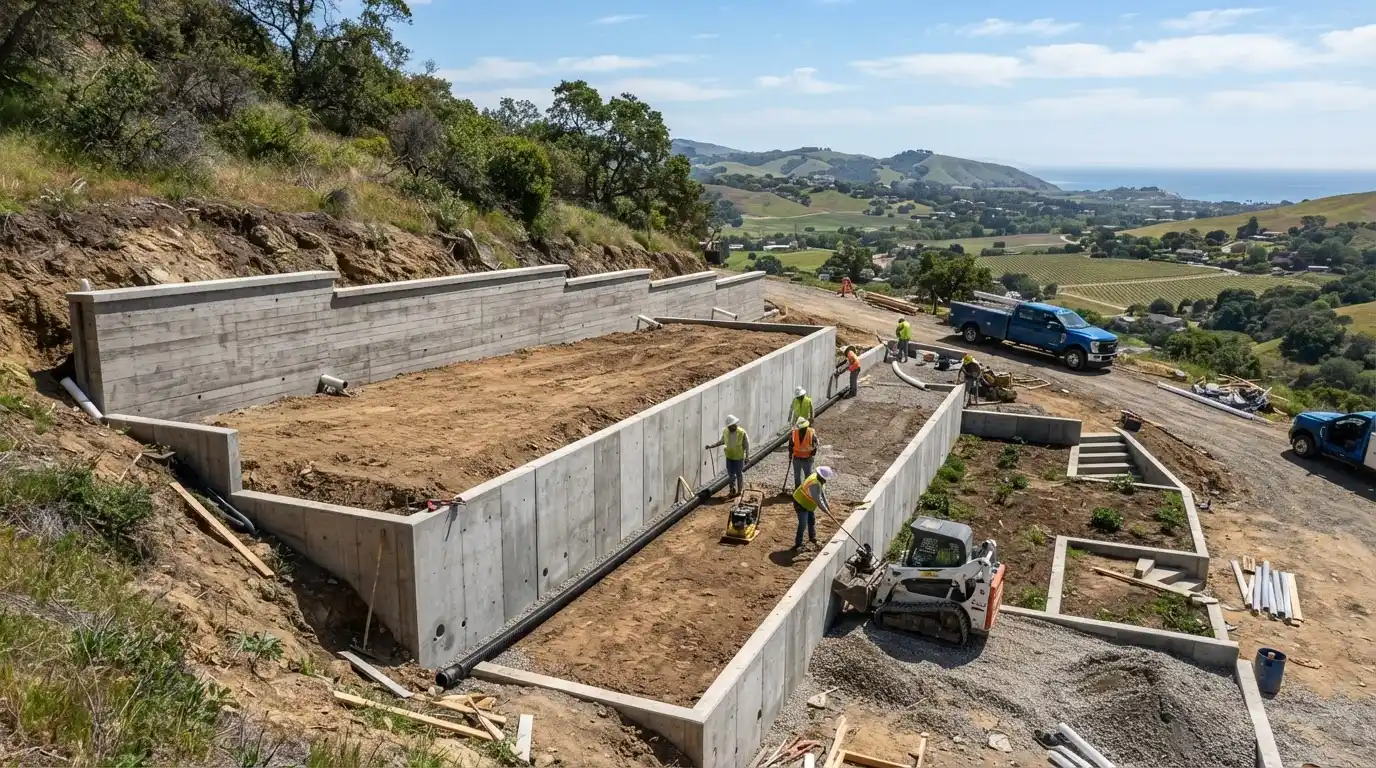
On properties with slopes, elevation changes or uneven grade, a retaining wall can be the difference between usable, organized outdoor space and awkward, eroding ground. Concrete retaining walls are a durable way to manage those transitions.
Here is what a concrete retaining wall can do, where it makes sense, and what to think about before planning one.
What a Retaining Wall Does
A retaining wall holds back soil and manages changes in elevation. Where one part of a property sits higher than another, a retaining wall creates a stable transition instead of a sloped, eroding bank.
By holding soil in place, a retaining wall prevents erosion, controls runoff and creates level areas that would otherwise be unusable. On hillside and rural Central Coast properties, that function is often essential.
Concrete is a strong choice for retaining walls because it is durable, solid and handles the pressure of held-back soil well over time. Our concrete replacement and retaining walls service covers these installations.
Common Uses on Residential Properties
Retaining walls are used to create level yard space on sloped lots — turning a hillside into a usable patio or lawn area. They also terrace steep grades into stepped, manageable sections.
They help manage drainage by controlling how water moves across a property, directing runoff away from foundations and vulnerable areas. A well-placed wall can redirect water that would otherwise cause erosion or pooling.
Retaining walls also define outdoor spaces, creating visual structure and clean transitions between different parts of the landscape. Combined with patios or walkways, they shape how the whole yard functions.
Concrete vs. Other Wall Materials
Concrete retaining walls offer solid, long-lasting performance. Poured concrete and concrete block walls handle significant soil pressure and stand up to weather without the deterioration that wood or some masonry walls experience.
Unlike wood, concrete does not rot, and unlike dry-stacked stone, a properly built concrete wall provides continuous structural resistance to soil pressure. That makes it suitable for taller walls and heavier loads.
Concrete walls can also be finished to complement the property — including decorative concrete treatments that tie the wall into surrounding patios or hardscape.
Planning a Retaining Wall Project
Retaining wall planning depends on the height of the wall, the slope it is managing, soil conditions and drainage. Taller walls and walls holding back significant soil require careful review of the site and the forces involved.
We do not claim engineered structural performance without a proper project review. If you are considering a retaining wall, the right first step is a site discussion about what the wall needs to do.
Call C.E.D. Concrete Services at (888) 587-0908 or request an estimate to discuss a retaining wall on your Paso Robles area property.
Concrete Replacement & Retaining Walls
Learn more about this service and how C.E.D. Concrete Services can help with your project.
Explore Concrete Replacement & Retaining Walls