Driveways take a beating — daily vehicle traffic, weather, ground movement and time all add up. Some wear is normal, but certain signs point to a driveway that has reached the end of its useful life.
Knowing the difference between a surface that needs a small repair and one that needs full replacement can save you money and frustration. Here are the signs to watch for.
Widespread or Deep Cracking
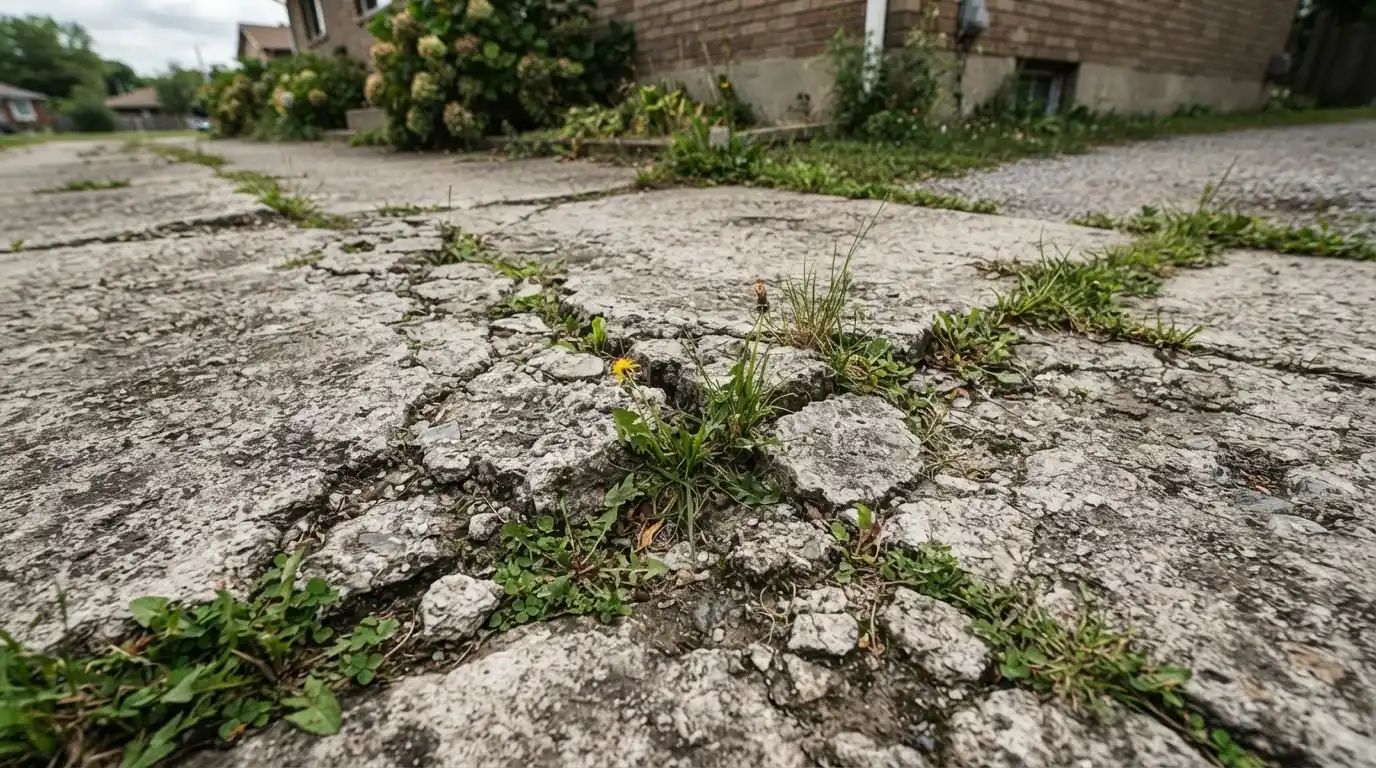
A few hairline cracks, especially along control joints, are normal. But widespread cracking, deep cracks, or cracks that are spreading and connecting across the driveway are a different story.
When cracks form a network across the surface, it usually means the base beneath the slab is moving or failing. Patching individual cracks in that situation is a short-term fix — the underlying problem keeps producing new cracks.
If cracking is extensive and accelerating, replacement is typically the more durable solution. Our concrete replacement services handle full removal and replacement of failing driveways.
Settling, Sunken Sections and Pooling Water
If sections of your driveway have sunk, settled or become uneven, the base has likely compacted or washed away beneath the slab. Sunken areas create trip hazards and change how water flows across the surface.
Pooling water is a related warning sign. A driveway should shed water to the sides or toward a drain. When water pools in low spots, it accelerates damage to the concrete and the base underneath.
Settling and drainage problems tend to get worse, not better. Once the base has failed in an area, a replacement that rebuilds the subgrade is usually the right fix.
Spalling, Pitting and Surface Breakdown
Spalling — where the surface flakes, chips or peels away — and pitting indicate the top layer of the concrete is breaking down. This can come from freeze-thaw cycles, poor finishing, or water and chemical exposure over time.
Surface breakdown exposes the aggregate underneath and weakens the slab. Once spalling is widespread, resurfacing rarely holds up for long because the underlying concrete is already compromised.
A driveway with extensive spalling is a strong candidate for replacement rather than cosmetic patching.
Age and Overall Condition
If your driveway is decades old and showing multiple problems at once — cracking, settling and surface wear — it has likely reached the end of its service life. Combining issues usually means the base, the surface or both have given what they can.
When several signs appear together, replacement gives you a clean start: a properly prepared base, correct thickness, good drainage and a fresh finish. Read more about driveway lifespan to understand what a well-built surface should deliver.
If you recognize these signs, call C.E.D. Concrete Services at (888) 587-0908 to discuss replacing your driveway.
Concrete Replacement & Retaining Walls
Learn more about this service and how C.E.D. Concrete Services can help with your project.
Explore Concrete Replacement & Retaining Walls